Introduction
Sculpture has long occupied a distinctive place in the history of art, transforming stone, wood, metal, and clay into forms that capture human experiences and cultural ideas. Today, this traditional medium is experiencing a renewed creative energy. Contemporary sculptors are moving beyond familiar materials and conventional techniques to explore new dimensions of space, technology, sustainability, and public engagement.
The modern sculpture renaissance reflects a broader transformation in how art is created and experienced. Rather than remaining confined to galleries and museums, sculptures increasingly interact with architecture, natural landscapes, urban environments, and digital technologies. These developments challenge established definitions of sculpture while creating opportunities for audiences to connect with art in unexpected ways.
The Evolution of Modern Sculpture
Traditional sculpture often emphasized recognizable figures, historical subjects, and carefully crafted representations of the human body or natural world. Although these approaches remain important, modern and contemporary artists have expanded the medium to include abstraction, conceptual experimentation, and unconventional forms.
During the twentieth century, sculptors increasingly challenged the idea that artwork needed to imitate reality. Geometric structures, fragmented figures, and simplified shapes demonstrated that sculpture could communicate through form, proportion, texture, and spatial relationships rather than realistic representation alone.
Contemporary sculpture builds upon these developments. Artists experiment with suspended objects, flexible materials, industrial components, and large-scale installations that transform entire rooms. Some works are designed to change over time, while others respond to the movement or presence of visitors.
This expanded approach allows sculpture to become more than an isolated object. It becomes an experience shaped by its surroundings and the people who encounter it.
Exploring Unconventional Materials
One of the most significant characteristics of the modern sculpture renaissance is the growing diversity of materials used by artists.
Metal, stone, and wood continue to provide essential foundations for sculptural practice, but contemporary creators also work with glass, recycled plastics, textiles, paper, industrial waste, and repurposed everyday objects. These materials introduce different textures, structural possibilities, and meanings.
A sculpture constructed from discarded metal components, for example, may explore industrialization, consumption, or environmental change. Transparent glass can create a dialogue between solidity and fragility, while fabric introduces softness and movement into a traditionally rigid medium.
Material selection can also influence how audiences interpret an artwork. Reclaimed objects may preserve traces of their previous uses, connecting the sculpture to memories and histories beyond its physical appearance.
By combining traditional craftsmanship with experimental materials, contemporary sculptors demonstrate that artistic possibilities often emerge from seeing familiar objects in unfamiliar ways.
The Relationship Between Sculpture and Space
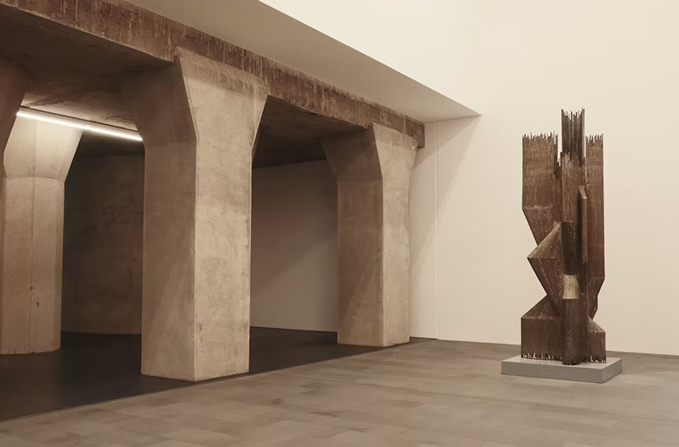
Unlike paintings, which generally occupy a defined surface, sculptures exist within three-dimensional space. Their forms can be examined from multiple viewpoints, and their relationship with the surrounding environment becomes part of the artistic experience.
Modern sculptors increasingly use this spatial quality to challenge audience expectations. Large installations may fill exhibition halls, extend across architectural structures, or create pathways that visitors can walk through.
The surrounding space becomes an active component of the work. Shadows, reflections, distances, and sightlines influence how the sculpture is perceived.
Negative space is equally important. The openings between sculptural elements can create visual tension, establish rhythm, or suggest movement. In some abstract works, the empty areas surrounding the material are just as significant as the solid forms themselves.
This relationship encourages viewers to move around an artwork rather than observe it from a single fixed position. Each change in perspective reveals different details and creates a more personal encounter.
Technology and Digital Innovation
Technological advances have introduced new possibilities for sculptural design and production. Digital modeling software allows artists to visualize complex structures before construction, while computer-assisted fabrication can produce intricate forms with considerable precision.
Three-dimensional printing has also expanded access to experimental shapes and materials. Artists can create detailed components, test alternative structures, and combine digitally produced elements with handmade techniques.
Some contemporary installations incorporate sensors, programmable lighting, or moving components. These sculptures respond to sound, movement, or environmental conditions, creating works that change according to their surroundings.
However, technology is most effective when it serves the artistic concept. Sophisticated fabrication does not automatically create meaningful sculpture. The relationship between form, material, context, and audience remains central to the work’s impact.
The most compelling technological experiments often combine innovation with a clear understanding of the qualities that make sculpture distinct.
Sustainability and Environmental Awareness
Environmental concerns have become an important influence on contemporary sculptural practice. Many artists investigate how materials are produced, consumed, discarded, and reused.
Some transform plastic waste into large installations that draw attention to pollution. Others use reclaimed timber, recycled metals, or locally sourced natural materials to explore relationships between human activity and the environment.
Outdoor sculptures can also engage directly with natural surroundings. Wind, sunlight, rainfall, and changing seasons may influence the appearance or condition of an artwork, making environmental change part of the experience.
Sustainable sculpture involves more than choosing recycled materials. Artists must also consider transportation, fabrication methods, durability, and the eventual disposal or reuse of their work.
When these questions become part of the creative process, sculpture can encourage audiences to reconsider their relationship with material resources and the landscapes they inhabit.
Public Sculpture and Community Engagement
The modern sculpture renaissance is not limited to galleries. Public art increasingly brings sculptural experiences into parks, plazas, gardens, and urban streets.
Placed within shared environments, sculptures can become landmarks, encourage conversation, and strengthen a community’s sense of identity. Interactive works may invite visitors to move through, around, or alongside them, creating opportunities for participation.
Public sculpture also raises important questions about accessibility, cultural representation, and the use of shared spaces. Successful projects often consider local histories, community perspectives, and the needs of the people who encounter the artwork every day.
By moving sculpture into public life, artists can reach audiences who might not regularly visit traditional art institutions.
Conclusion
Beyond the canvas, the modern sculpture renaissance reveals a medium that continues to evolve through experimentation, technological innovation, and changing cultural priorities.
Contemporary sculptors are redefining the possibilities of three-dimensional art by exploring unconventional materials, transforming architectural spaces, incorporating digital tools, and addressing environmental concerns. Their work demonstrates that sculpture can be both an object of contemplation and an experience shaped by movement, context, and participation.
Despite these developments, the fundamental appeal of sculpture remains its ability to give physical form to ideas. Through material, structure, and space, artists create works that encourage viewers to reconsider familiar surroundings and discover new perspectives.
Ultimately, the modern sculpture renaissance is not simply about creating different objects. It is about expanding how art occupies the world, inviting people to encounter creativity beyond the boundaries of the traditional canvas.